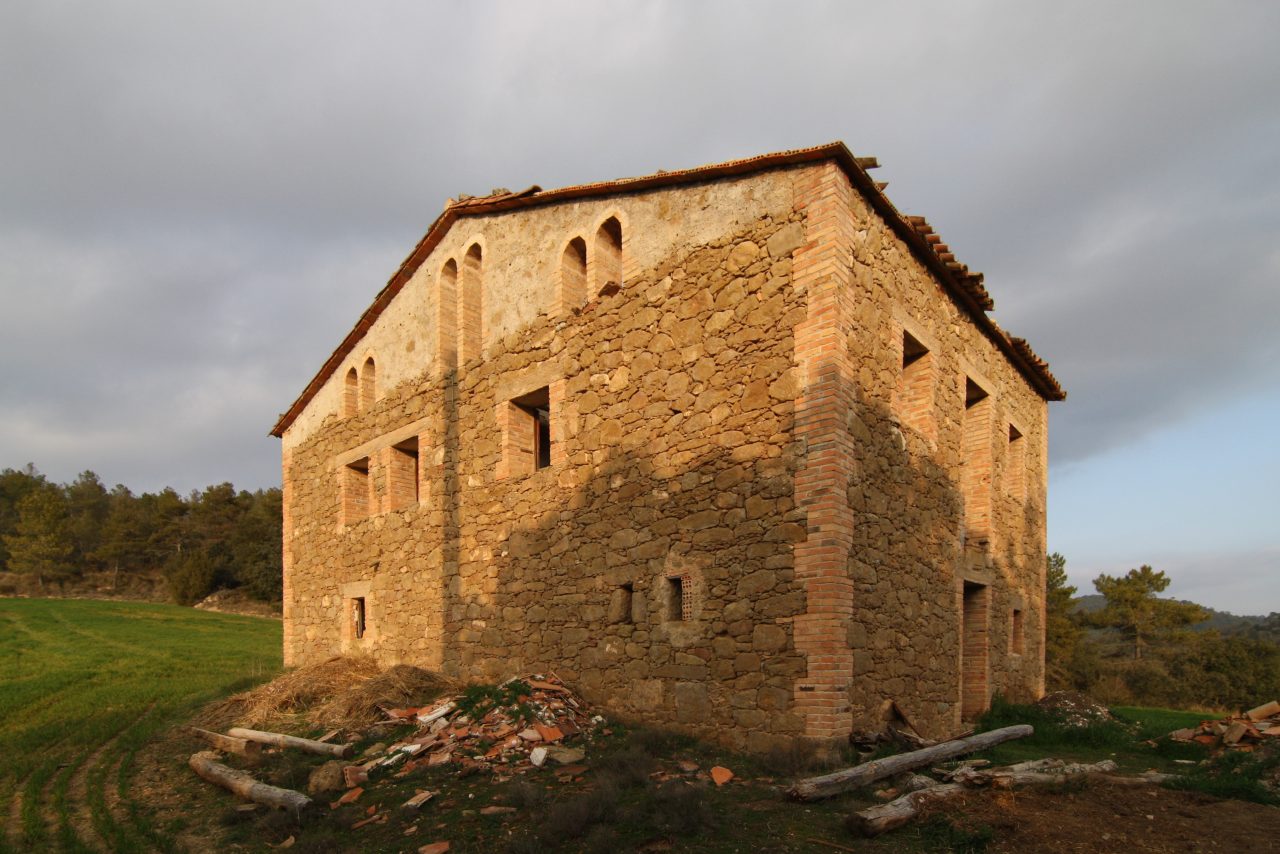
Convertir el magatzem de planta primera amb la prolongació de l’habitatge existent generant les condicions de socialització no obligada necessàries perquè hi puguin viure un dels fills amb la seva parella i puguin decidir, en cada moment, la relació que volen tenir amb els pares.
Generar unes condicions d’habitabilitat bones en una envolupant construïda sense cap façana a carrer és un dels principals reptes de la proposta. Per altra banda, el baix pressupost, la necessitat de col·locar un ascensor perquè els avis de l’habitatge existent puguin baixar al carrer i la demanda d’eficiència energètica són els altres reptes.
Seguint l’exemple de la cultura agrària, es busca com a valor que cada acció projectual doni resposta a més d’una demanda.


Programa/energia
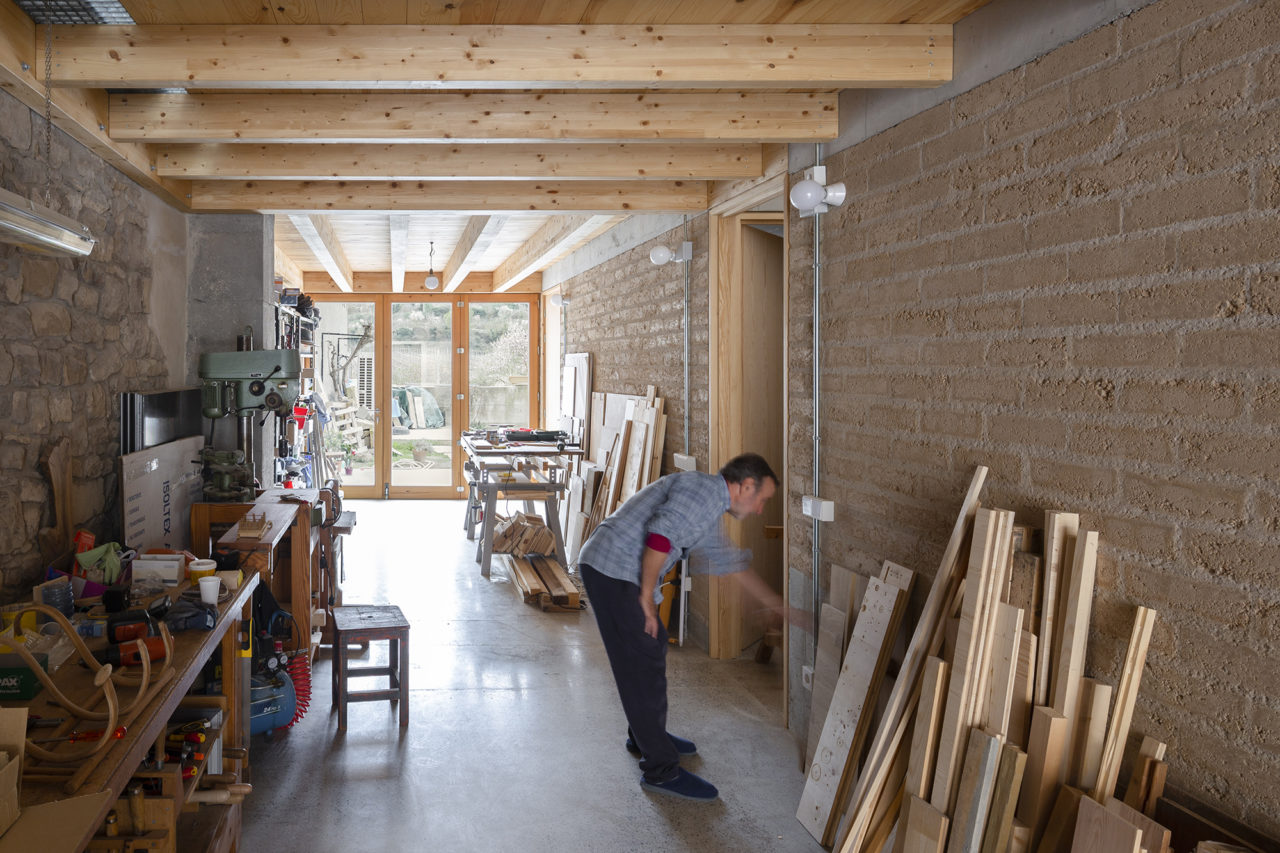
La intervenció consisteix a dividir el magatzem en dues crugies: l’espai intermedi (o sala polivalent) i el nucli habitable (o envoltant tèrmica). L’eficiència econòmica és un altre dels arguments a favor de la diferenciació en dues crugies. Una d’elles amb molta més despesa per les altes prestacions tèrmiques i la segona a més baix cost, deixant molts dels materials ja existents i només aïllant la coberta per evitar sobreescalfaments a l’estiu.


Accessibilitat / estructura
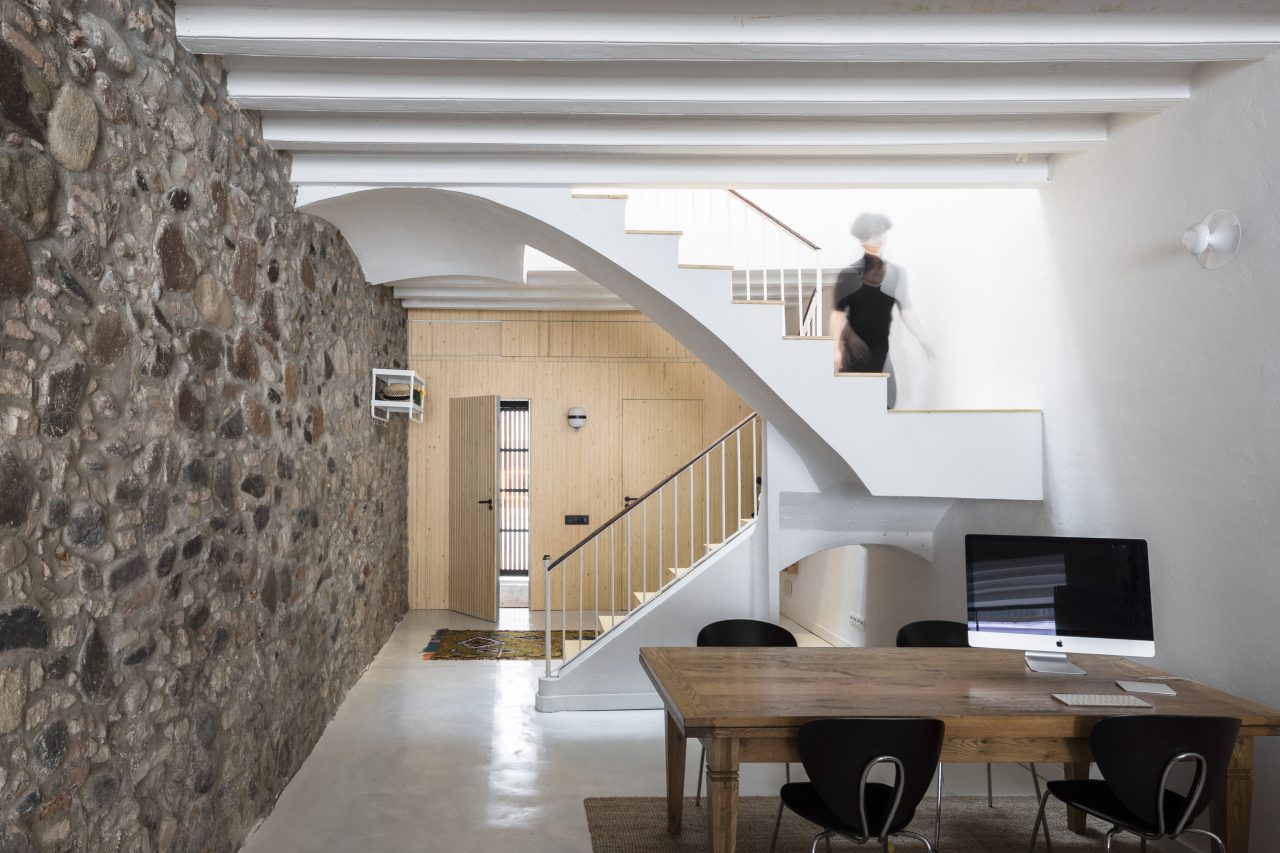
La col·locació de l’ascensor és l’únic nou element estructural que resol el reforç de l’estructura existent. Es col·loca la caixa d’ascensor com a pilar per generar un suport intermedi de la biga just a la distància que ens permet seguir tenint una planta baixa molt alliberada i la biga, en reduir la seva longitud, ens aguanta la càrrega exigida.
Sala polivalent / espai captador
A la primera crugia es planteja una peça que funciona com a espai de transició entre el nucli habitatge existent (pares i avis) i el nucli habitable proposat (el fill i la seva parella). Aquest espai té la funció de generar una separació entre ambdós nuclis, de manera que funcioni com a espai de suport i ampliació flexible en el temps. És l’espai on s’hi desenvolupen accions més compartides com la doble relació de l’espai de la rentadora compartida, la circulació vertical a través del nou ascensor i els espais de rebost, també compartit. En un futur, els usos poden variar en funció de diferents demandes programàtiques, adaptant aquest espai com convingui segons les necessitats de cada moment.
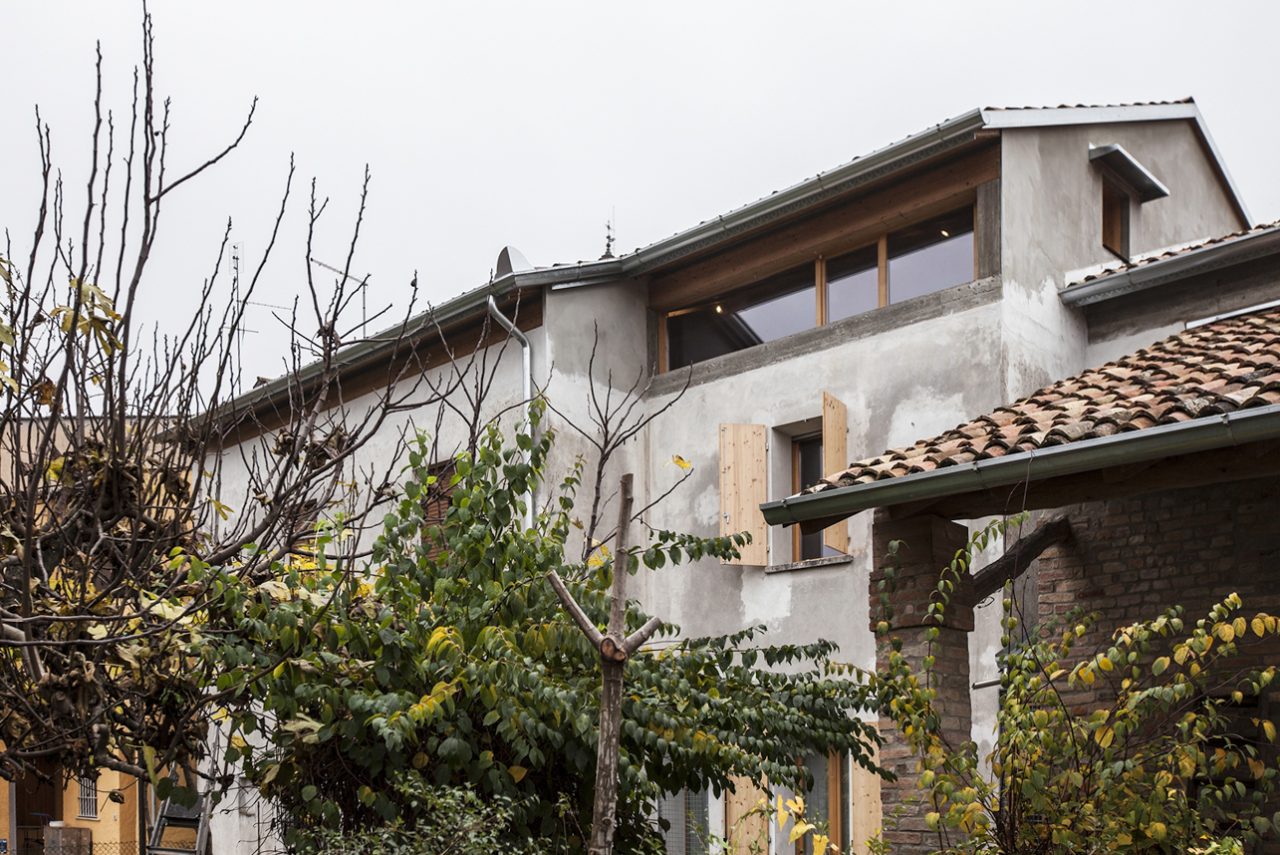
Al vessant sud d’aquesta crugia és on col·loquem l’entrada de captació principal per garantir una bona captació solar i escalfar de manera passiva l’habitatge. Aquesta aportació solar s’aconsegueix a través de l’efecte hivernacle de la gran galeria vidriada situada just a sota del carener. La posició del pati genera ombreig durant els mesos d’estiu i captació solar durant els mesos d’hivern.


Habitatge / envolupant tèrmica
La segona crugia conté els espais climatitzats d’aquest nucli habitable. Mitjançant la inserció de dues “caixes de fusta” l’espai queda subdividit i es generen les tres estances, dos banys i una cuina-menjador vinculada directament a l’espai polivalent.
Les dues caixes es construeixen mitjançant un sistema lleuger de prefabricació amb panells i entramat de fusta. Amb això s’aconsegueix una alta precisió en els acabats, així com es minimitza l’impacte ambiental dels materials utilitzats en aquesta part de la proposta.
S’ha apostat per generar una envoltant d’altes prestacions tèrmiques, amb 20cm d’aïllament tèrmic en coberta i 7cm en façana. El material utilitzat ha estat la cel·lulosa (paper de diari triturat) insuflada en les càmeres d’aire.