
Objectius
Memòria
El prototip (e)co neix en el marc acadèmic universitari de la ETSAV com a projecte de recerca d’un prototip experimental d’habitatge energèticament autosuficient vinculat a la competició Internacional Solar Decathlon l’any 2012.
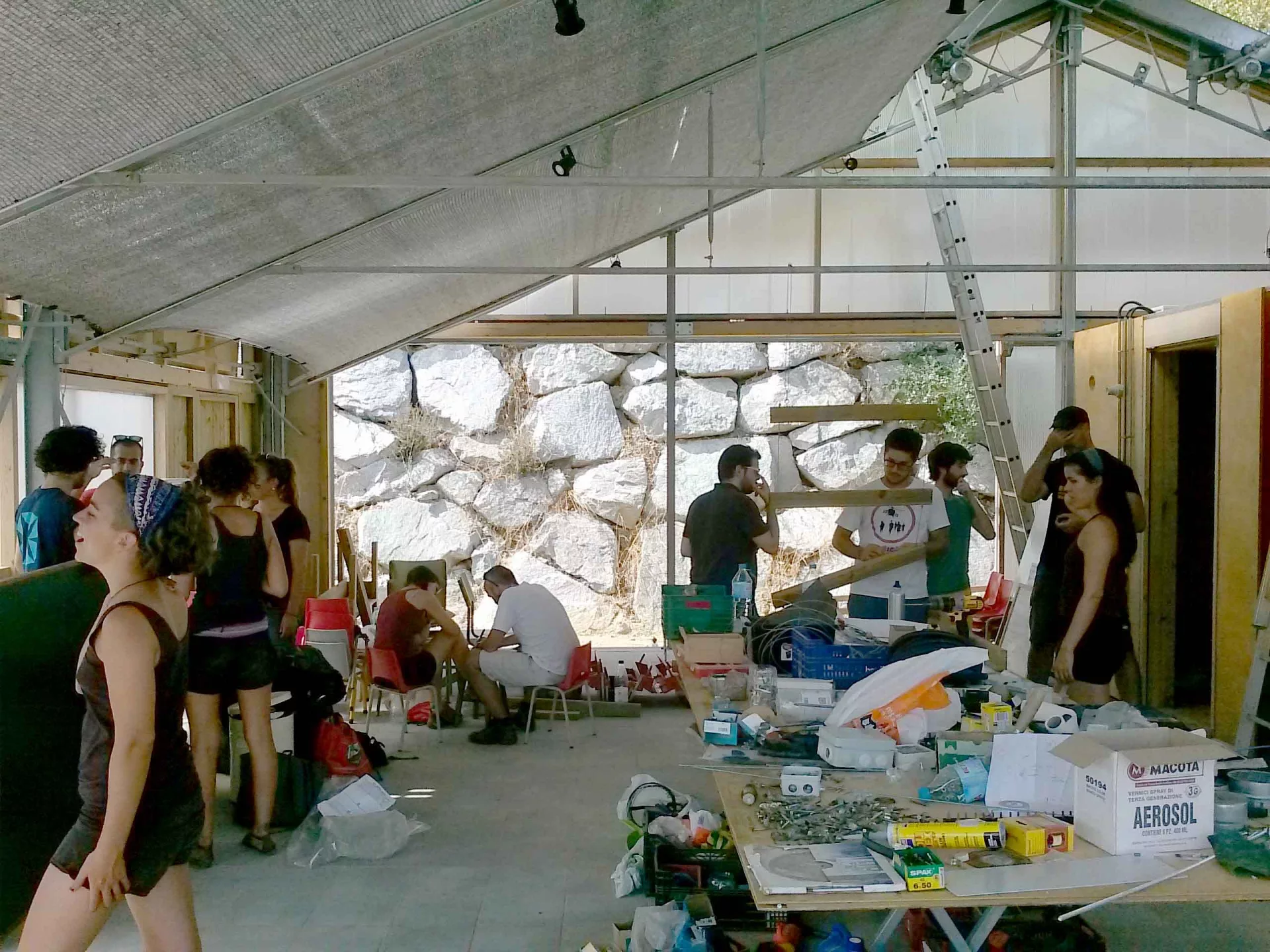
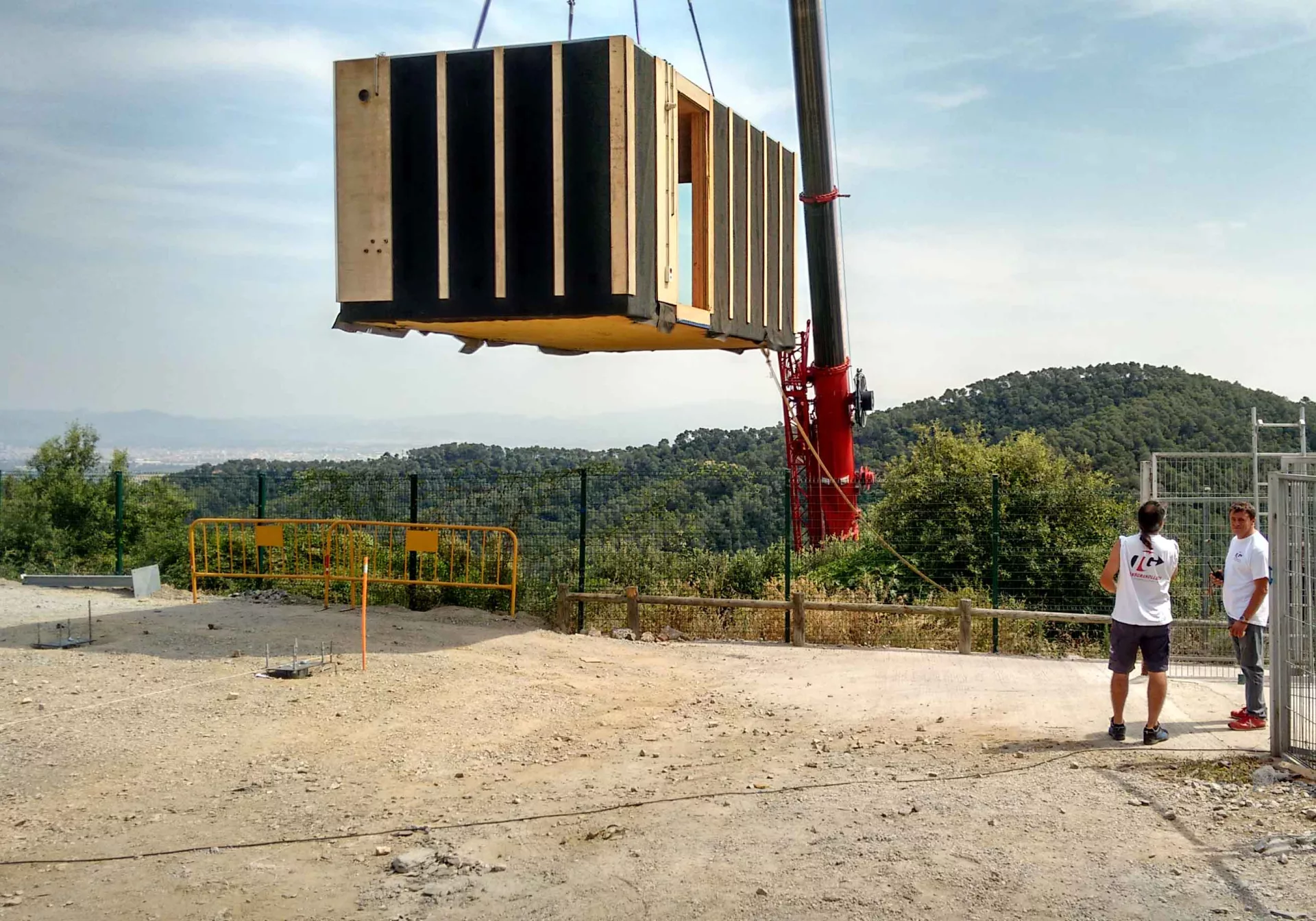
Posteriorment sorgeix la oportunitat de reutilitzar aquesta infraestructura de la universitat mitjançant un conveni de cessió gratuïta del material entre ETSAV i Ajuntament de Sant Cugat, i muntar-la de nou per donar servei a la comunitat de Les Planes.
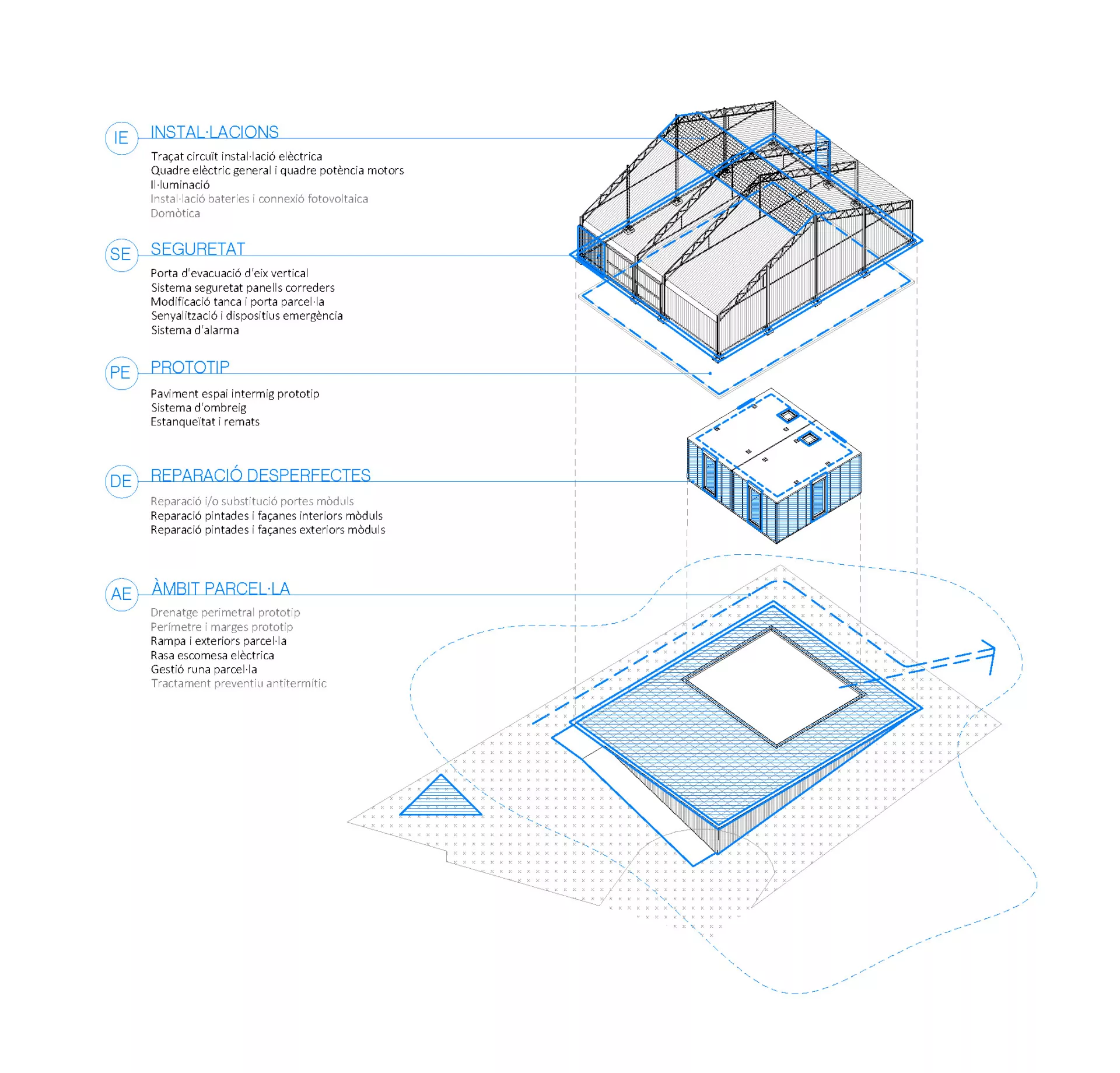
Arrel de les limitacions en els recursos econòmics disponibles, el muntatge s’ha contemplat en diverses fases per tal d’assolir progressivament les prestacions finals. Un període d’incertesa va propiciar l’apropiació de la infraestructura per part d’agents que en van fer un ús poc respectuós, fet que ha obligat a abordar també tot un conjunt de tasques de reparacions i millores.
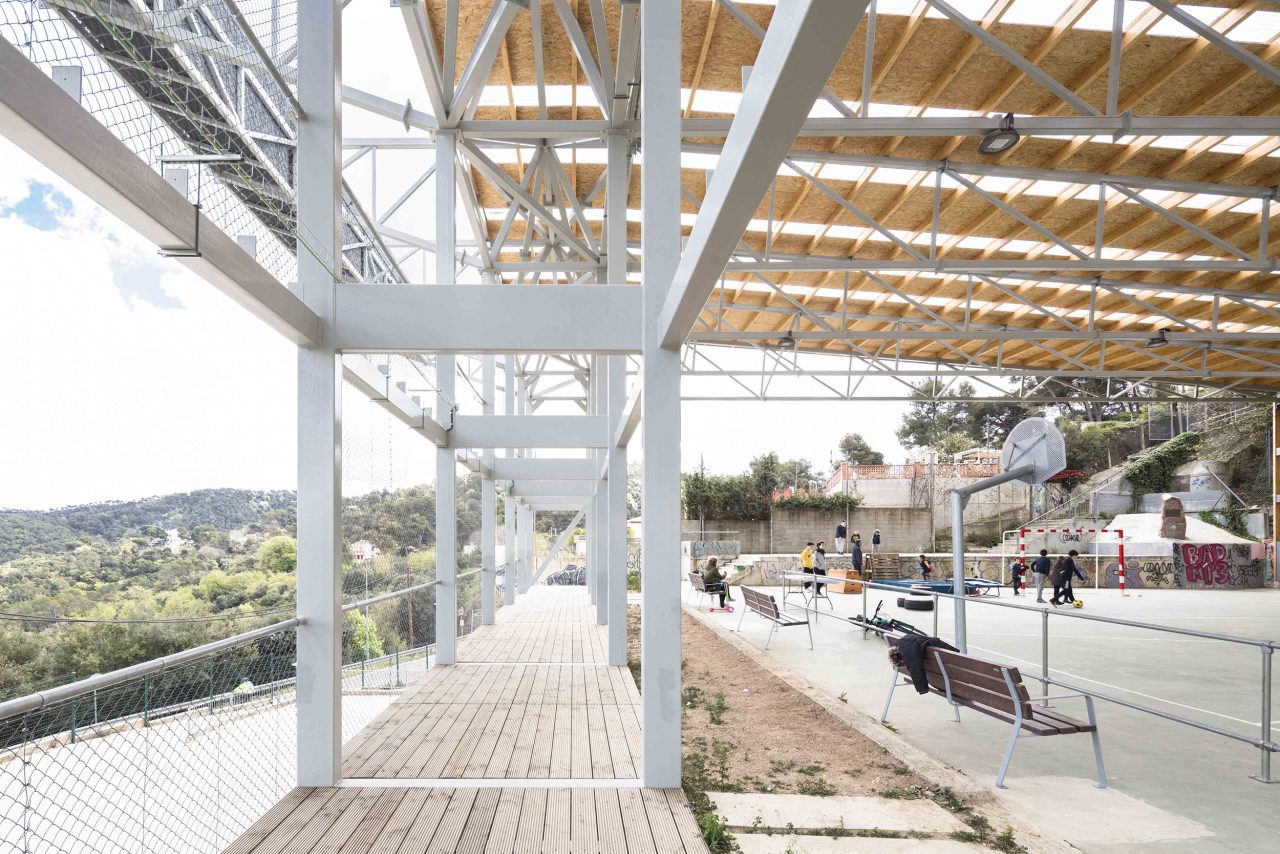
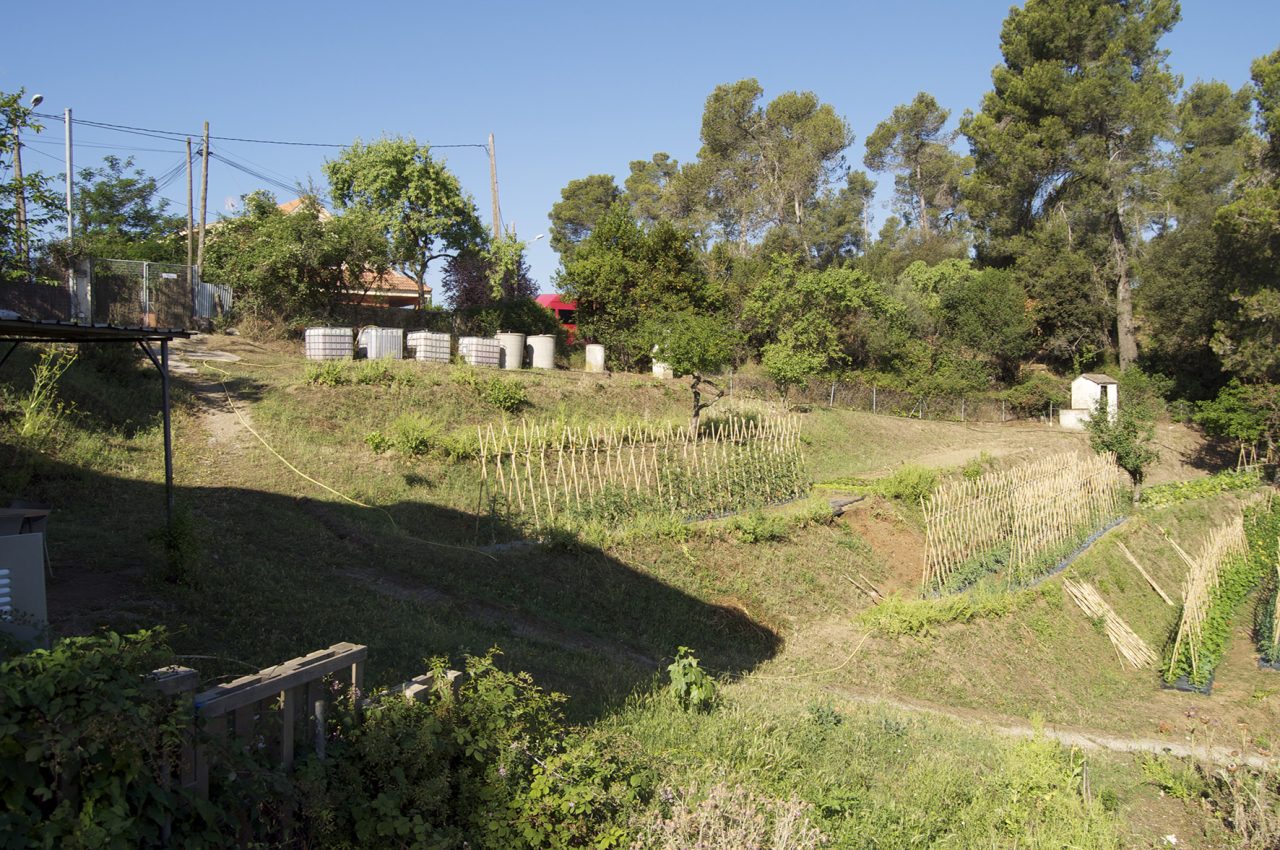
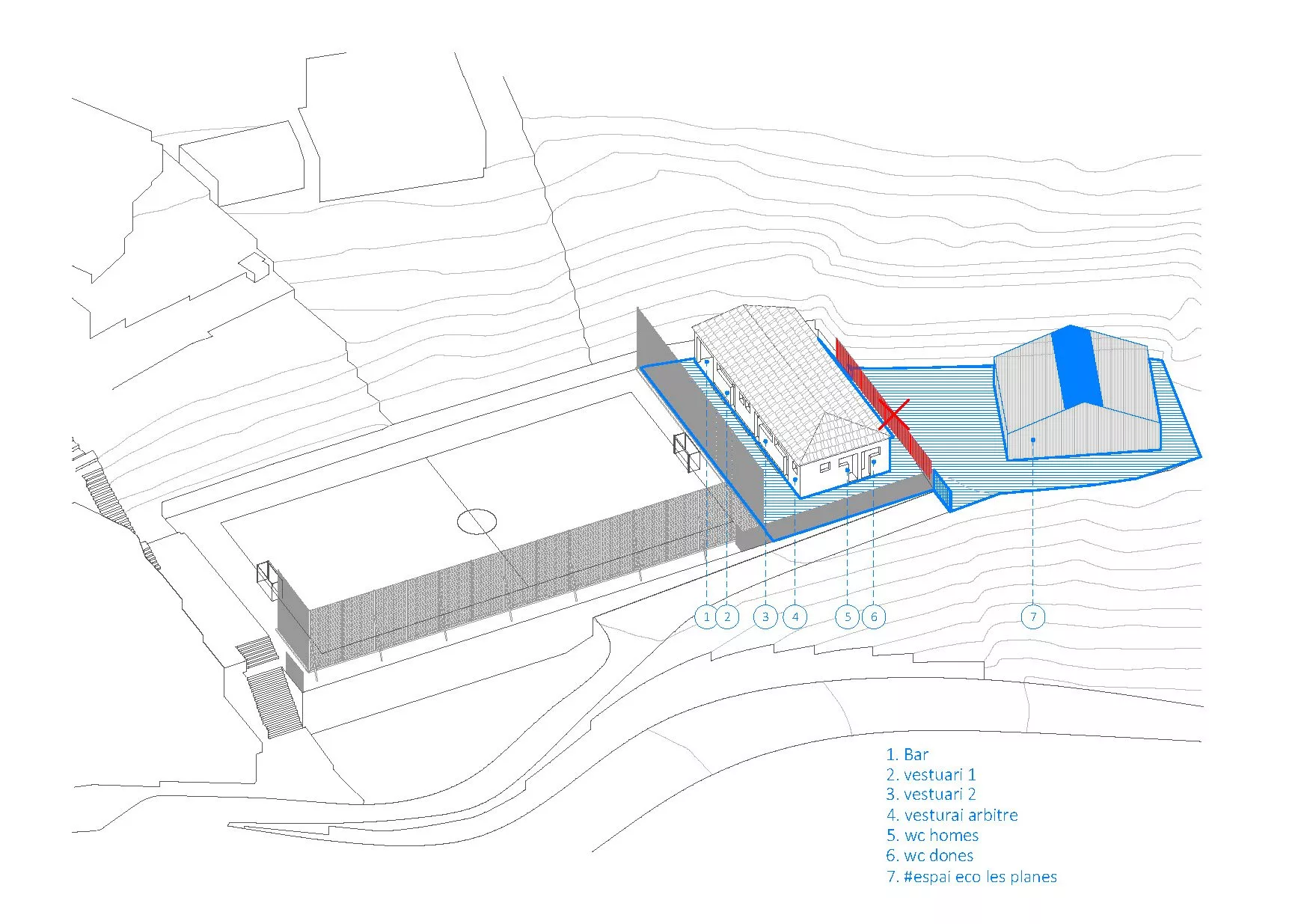
S’ha considerat dues estratègies d’implantació diferents i complementàries per atendre simultàniament als dos espais col·lectius del barri: la pista esportiva Espai Pere Grau i el Casal-centre cívic.
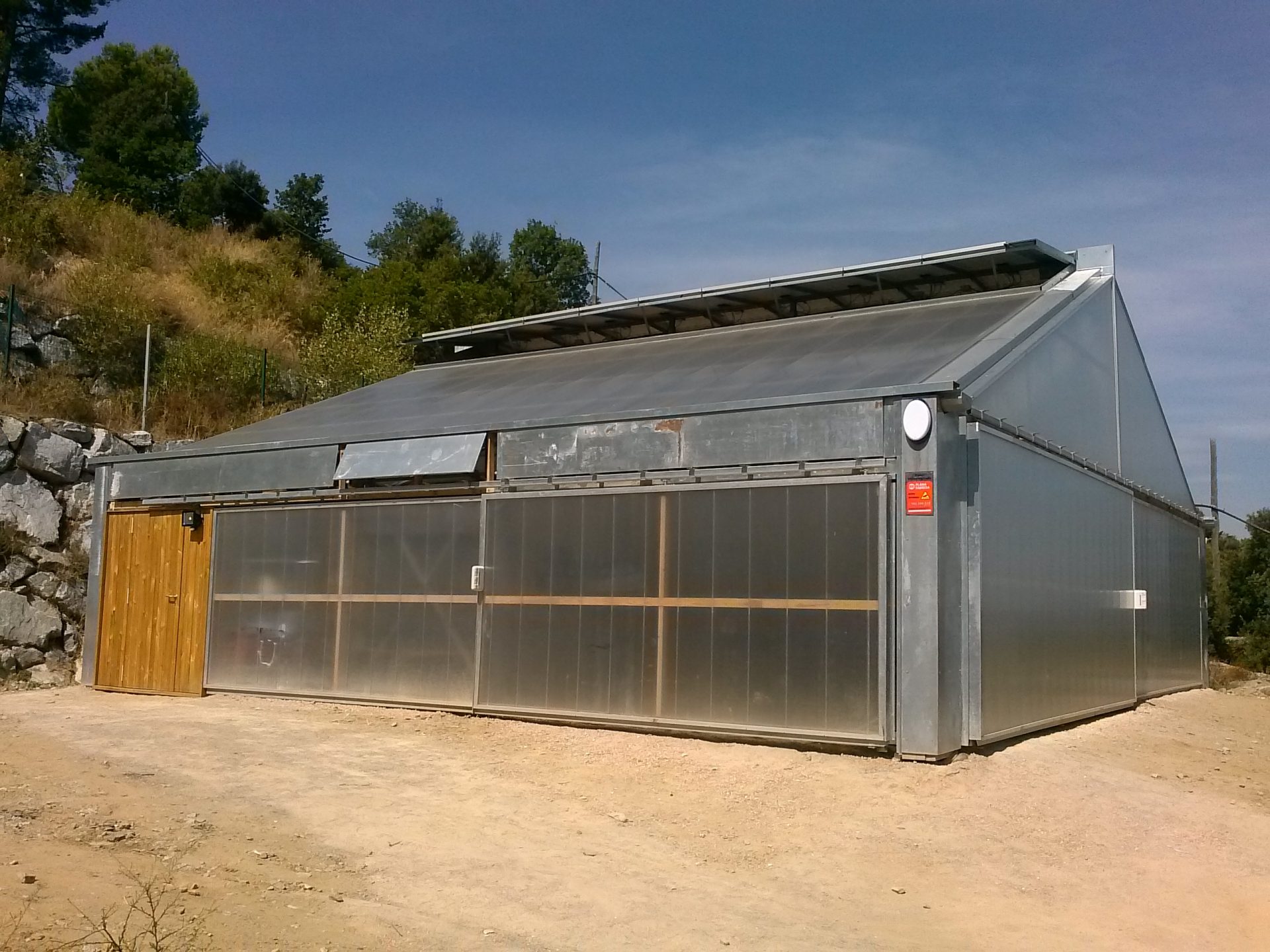
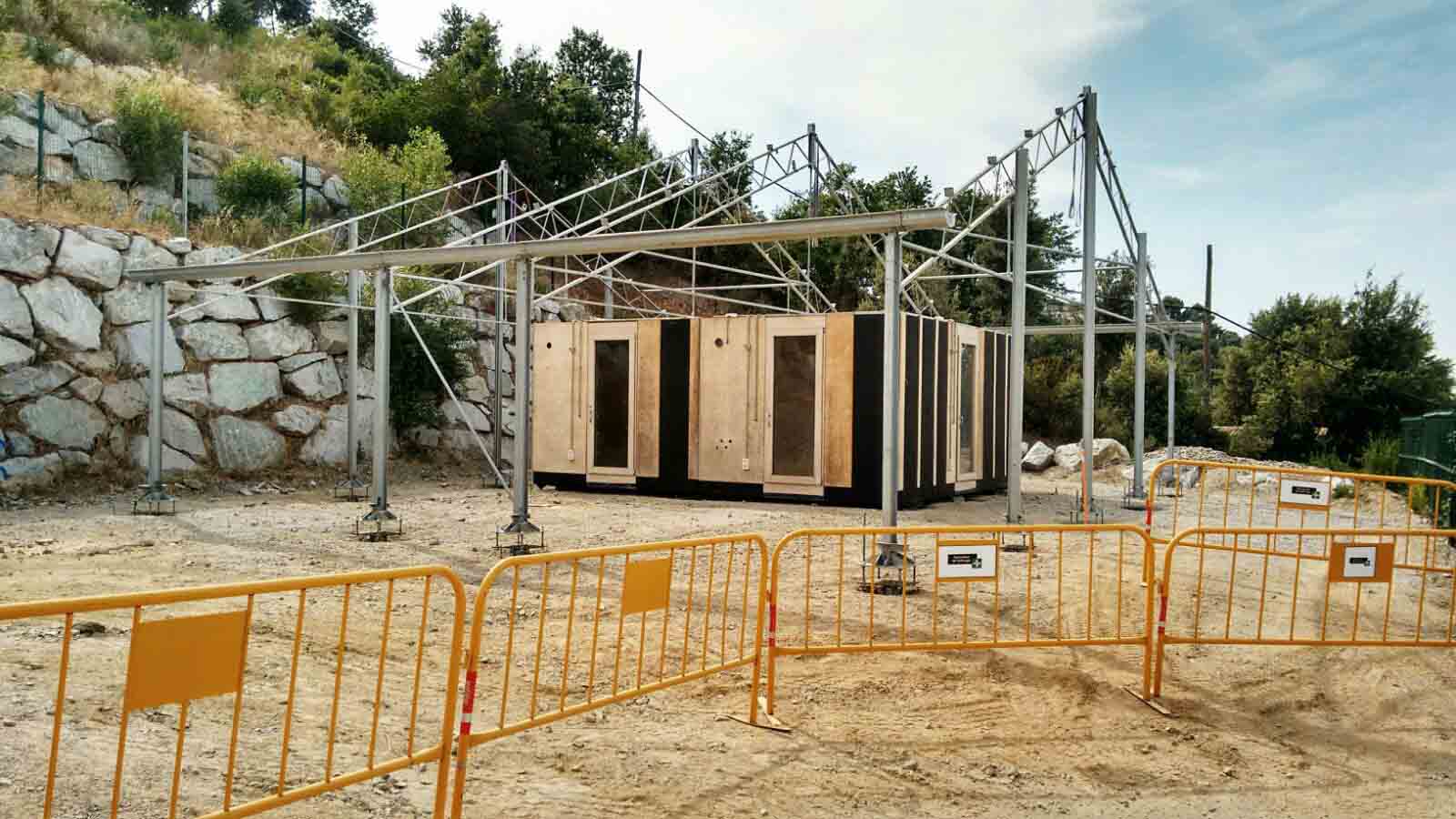
L’hivernacle i dos dels mòduls s’han col·locat a la parcel·la contigua a l’edifici dels vestuaris amb l’objectiu d’incentivar i afavorir la transformació d’aquest àmbit de gran potencial de sociabilitat al barri, oferint alhora uns primers espais en confort, mitjançant dues estances independents i una àmplia zona polivalent en l’espai intermedi.
El tercer mòdul, ara equipat per poder estar a l’exterior, s’ha ubicat annex a l’edifici del Casal esdevenint un espai complementari per poder atendre de manera més immediata a les necessitats d’espais de reunió de les entitats del barri.
Espais Intermedis / Gradients de Confort
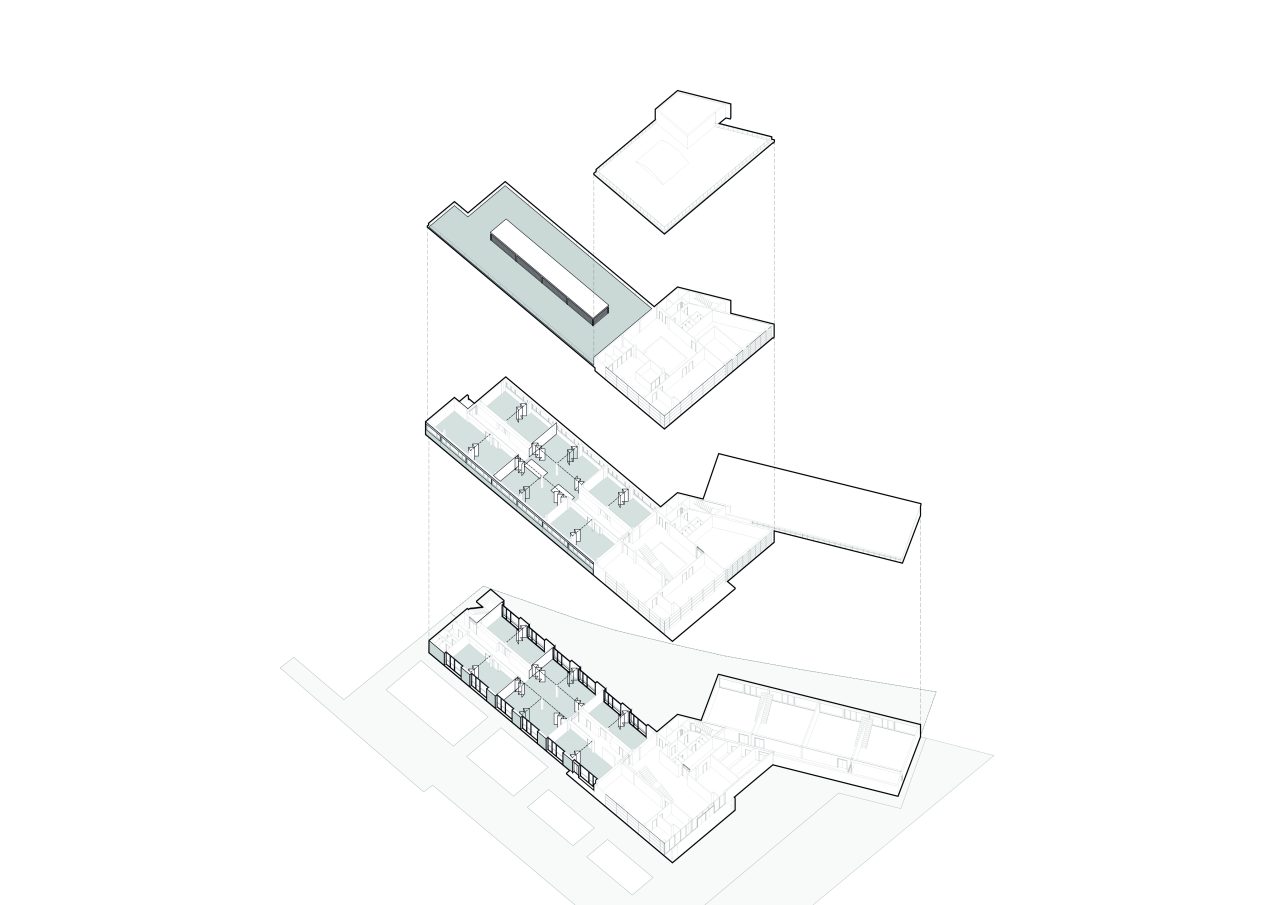
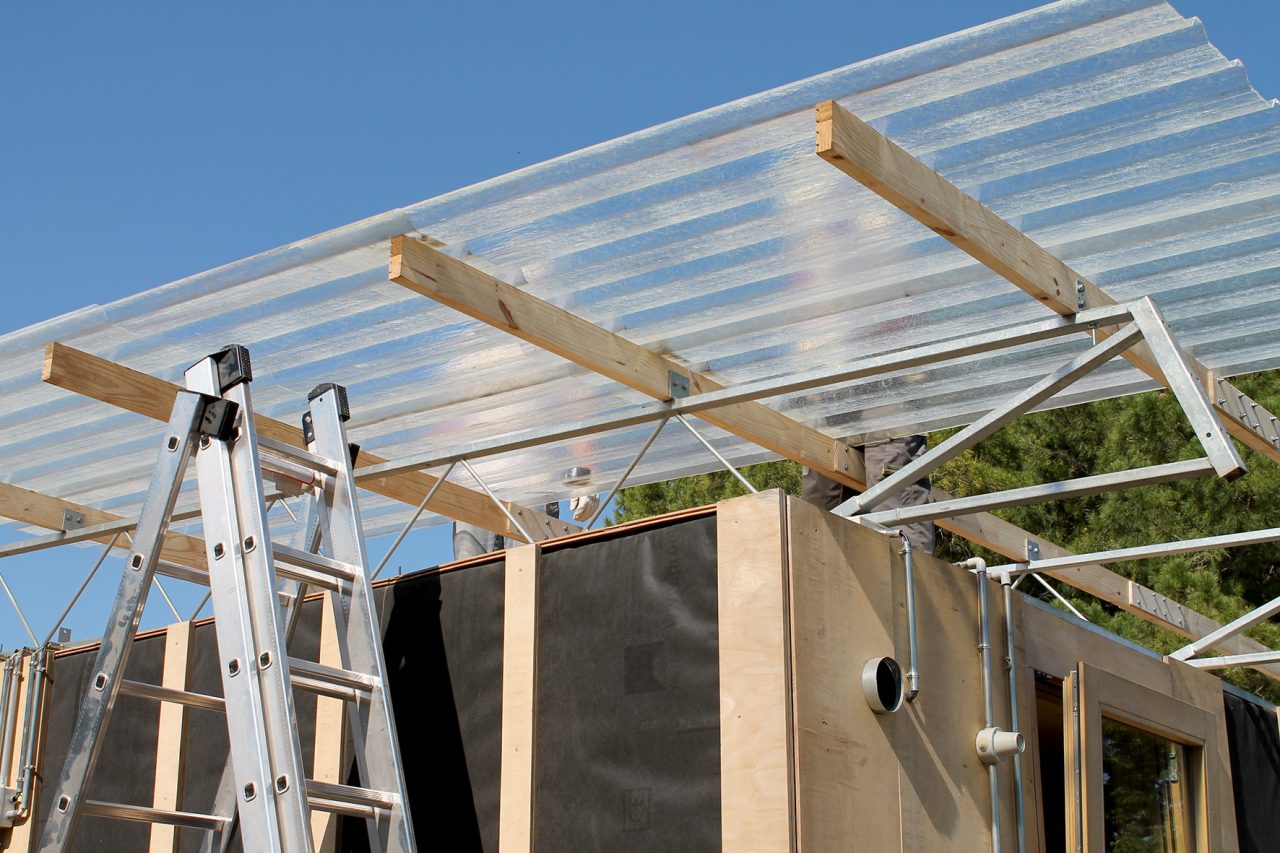
L’estratègia principal del prototip persegueix el concepte de “box in box” o doble envolvent a través de dos sistemes constructius complementaris que responen a un cicle orgànic i un cicle industrial, contemplant el potencial de configuracions diverses segons les necessitats:
La complementarietat i interdependència d’ambdós sistemes respon a una estratègia climàtica i també programàtica.
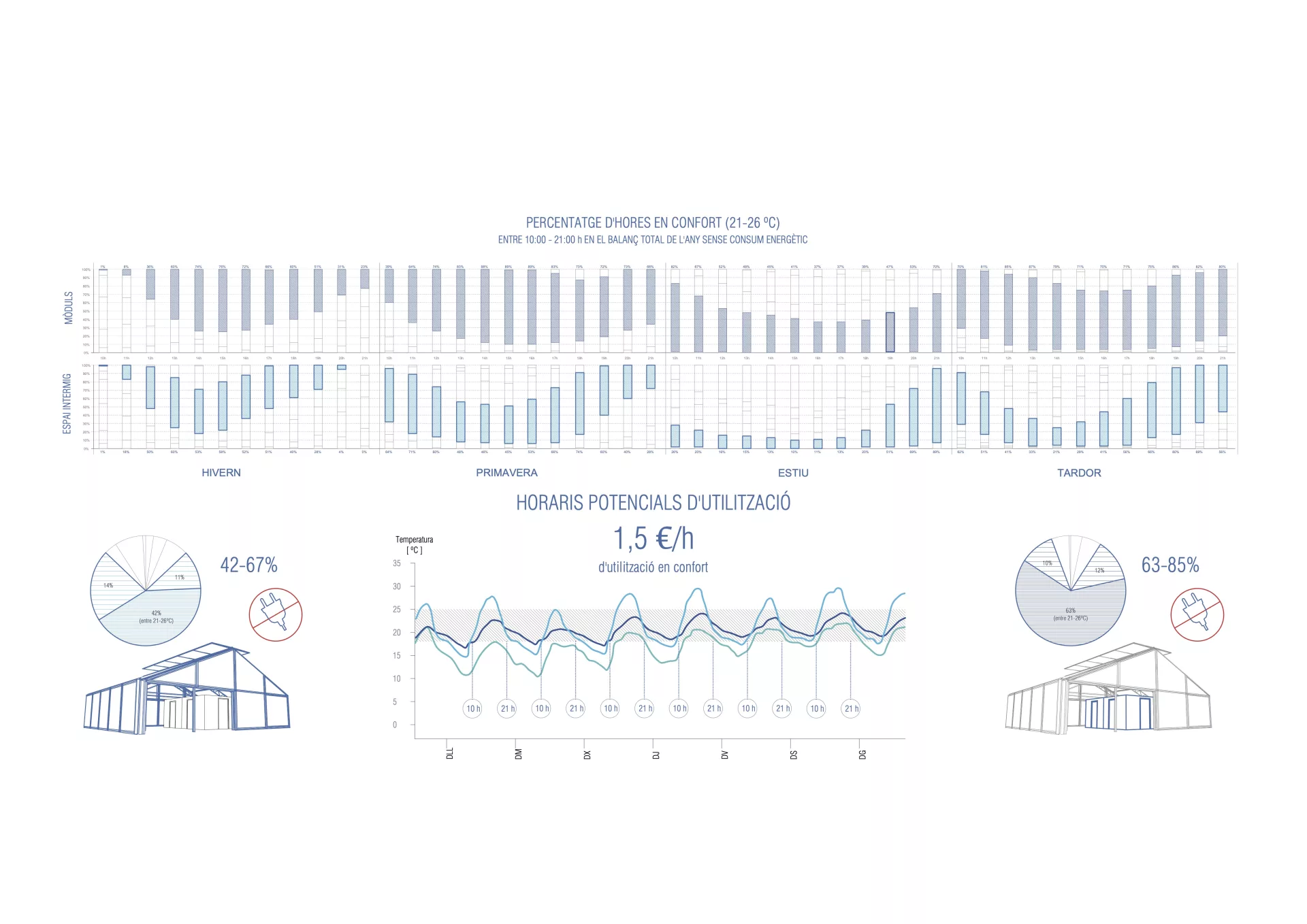
L’espai intersticial que es genera entre aquestes dues envolvents és l’espai intermedi, element clau del projecte que es pot definir com un espai d’intercanvi i relació. És un espai híbrid i micro-climàtic capaç d’oferir als usuaris una aproximació passiva a les condicions de confort, alhora que generar un gradient entre espai interior i exterior.
Vida útil / Cost d’oportunitat
Des de les estratègies de partida del prototip, s’ha perseguit com a objectiu la seva versatilitat i capacitat de transformació, per tal d’afavorir el seu potencial de REprogramació en el temps.
El marc acadèmic en què s’origina, l’àmplia constel·lació d’agents involucrats i la inversió econòmica, en temps i energia necessàries, accentuen la oportunitat de prolongar-ne la vida útil i incrementar-ne els usuaris, amortitzant i compensant així la seva petjada ecològica.
El finançament inicial en el marc d’un projecte de recerca universitària, les estratègies climàtiques passives i la condició d’autosuficiència energètica del prototip, atorga un cost d’oportunitat en la reutilització de la mateixa infraestructura per la seva nova implantació a un cost energètic i d’utilització molt baix.
El prototip com a eina / Temporalitat i Reversibilitat
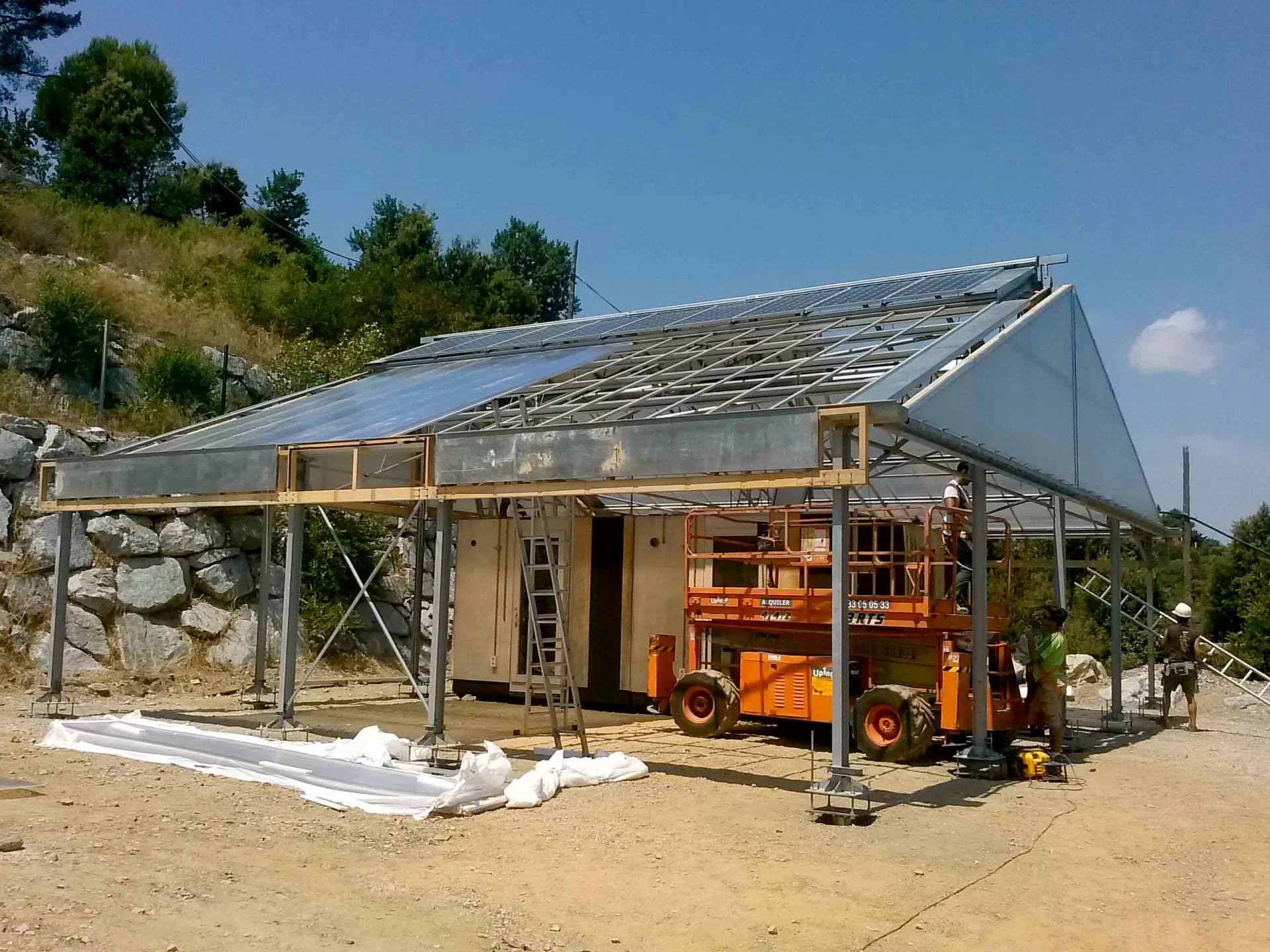
La reversibilitat i els sistemes de construcció en sec, fins i tot en la cimentació, permeten una total desmuntabilitat del prototip, sense deixar residu ni impacte en el terreny, otorgant-li la condició de temporalitat per utilitzar-lo el temps que sigui necessari, sense hipotecar futuribles escenaris de transformació del barri.
El prototip esdevé així una “eina” experimental per generar espais en confort a un cost energètic molt baix alhora que afavoreix l’apropament i convivència de la recerca als barris per incentivar i afavorir l’intercanvi de coneixement i potenciar el retorn social.